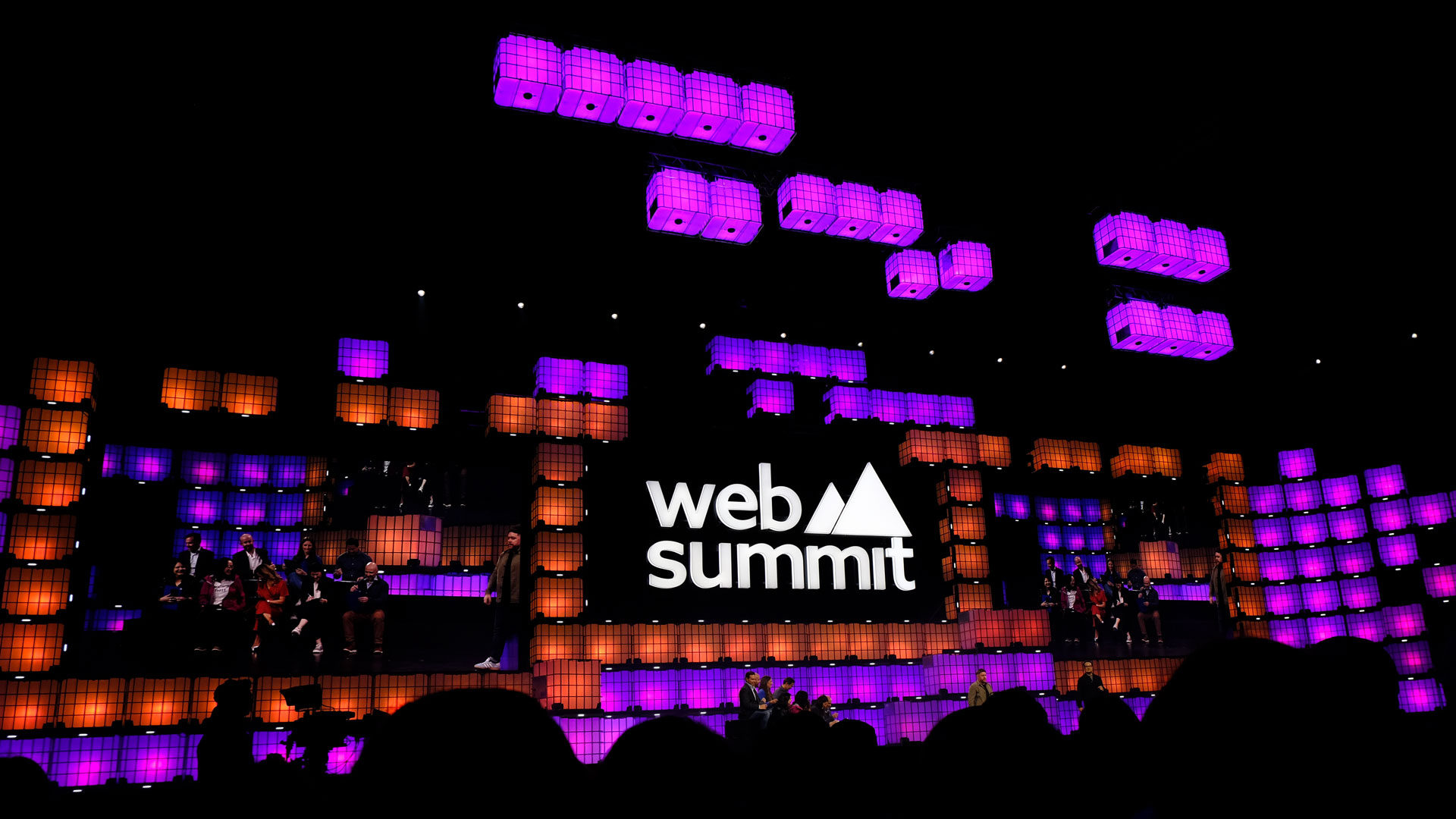
Just like a school field trip report, here’s what we have gathered from the Web Summit 2025. With no surprise, AI is the word of the year, well… the word of the probably the last 5 years in tech and design.
So Web Summit, as you might imagine, was an overwhelming experience and since this big jump of AI, the feeling gets bigger. The world we once “desired” in sci-fi films and cartoons is drawing closer, creating an equal measure of fear and excitement.
So, join me on this 3-day event journey. We skipped the final day (Day 4), and while we surely missed some unbelievable robot shows and great speakers, it was time to head back.
Just a brief note:
At the Web Summit, I quickly realized my favorite talk format was the keynote mode. I’m a visual person, but that’s not the only reason; with hundreds of attendees, there’s always a low, buzzing noise, so having a screen to follow the speaker’s main ideas helped a lot. In the “super fireside” mode, essentially a conversation between two, three, or four people, the mediator often takes too much of the lead. Consequently, the questions become too generic or remain in a bubble between the guest and the moderator/interviewer, and the focus starts to dissipate, at least in my mind.
That’s why I prefer the keynote mode, which is usually a solo or duo presentation. Here, the speaker delivers content with rhythm and is challenged to use their creativity to truly engage the audience.
What’s your favorite talk format?
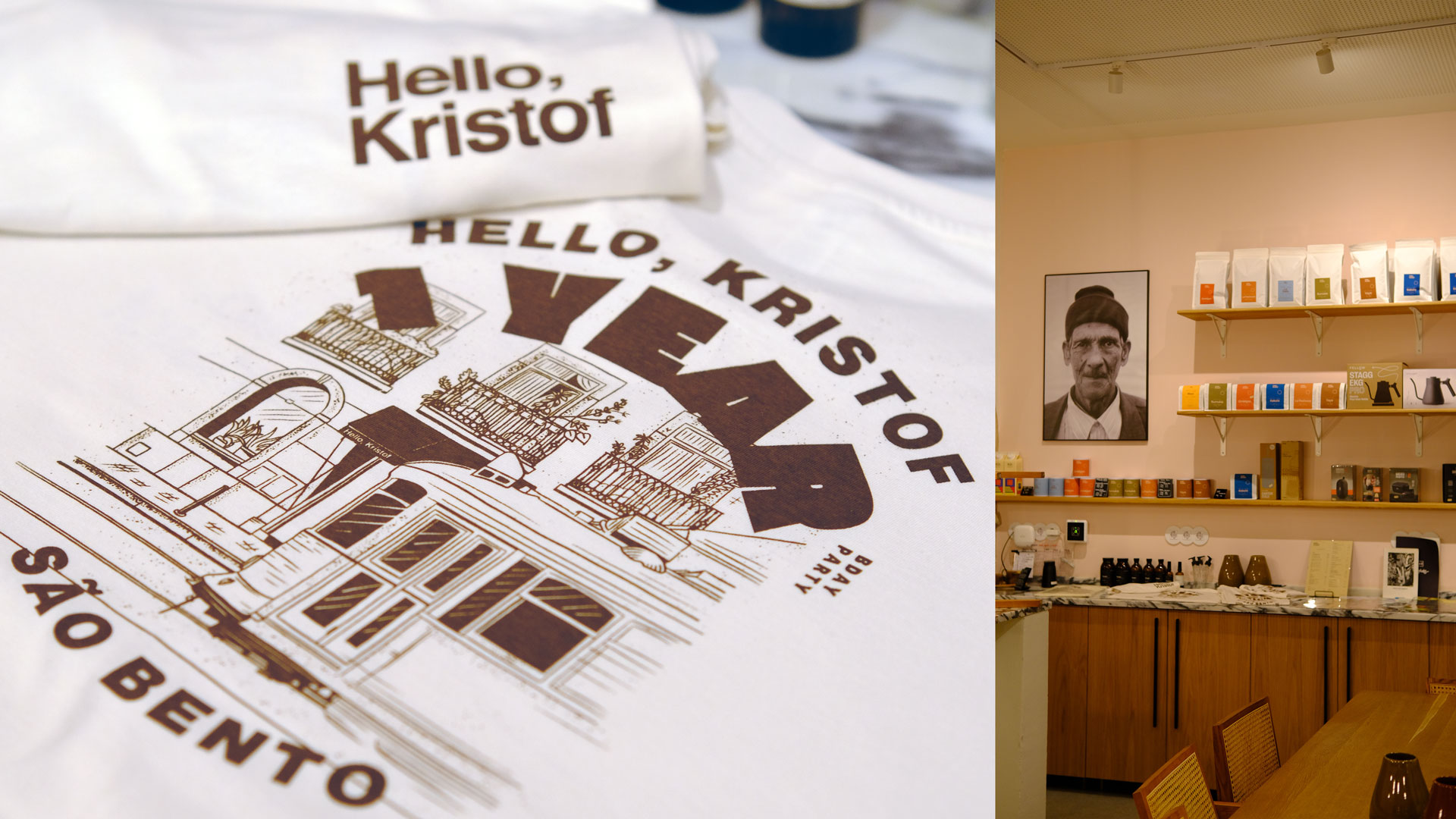
Hello Kristof – São Bento location
Day 1 – Opening Night
Before the Web Summit opening, we went to have a meeting with a lovely couple, owners of Hello Kristof, to discuss future projects for the packaging of their roasted coffee and to visit the cozy space in S. Bento, one of the three locations they own. Bavaroise was responsible for their 1-year celebration illustration, used in merch and communication. After that, we ran to the check-in points of the Summit.
There we start noticing that the centre stage was within its full capacity, so a streaming screen was available outside the Meo Arena, not the ideal first good impression…but here’s the highlight: Anton Osika, Co-founder and CEO of Lovable, a plattaform run by AI which allows you to build software products, using only a chat interface, was on of the talks that got our attention.
The discussion covered how the community is growing and helping people turn ideas into real products. However, there was also a focus on security, which is a public concern. If you can create something like a banking app in a few hours, how do you ensure the data is protected
Anton advises that the tool is available, but you still need experts to handle these sensitive security issues. Lovable is a unicorn company that was only started in 2023.
Day 2 – Fear of Missing Out
The Bavaroise team was in attendance, but even inside the event, we experienced a touch of FOMO since it’s impossible to be everywhere. To manage this, we split our schedule between exploring the five Pavilions, each containing two stages, and also attending several talks on the Centre Stage.
The People Summit stage featured discussions focused on the future of employment and recruitment, unbiased payment systems, and reward structures based on an individual’s evolution within a company.
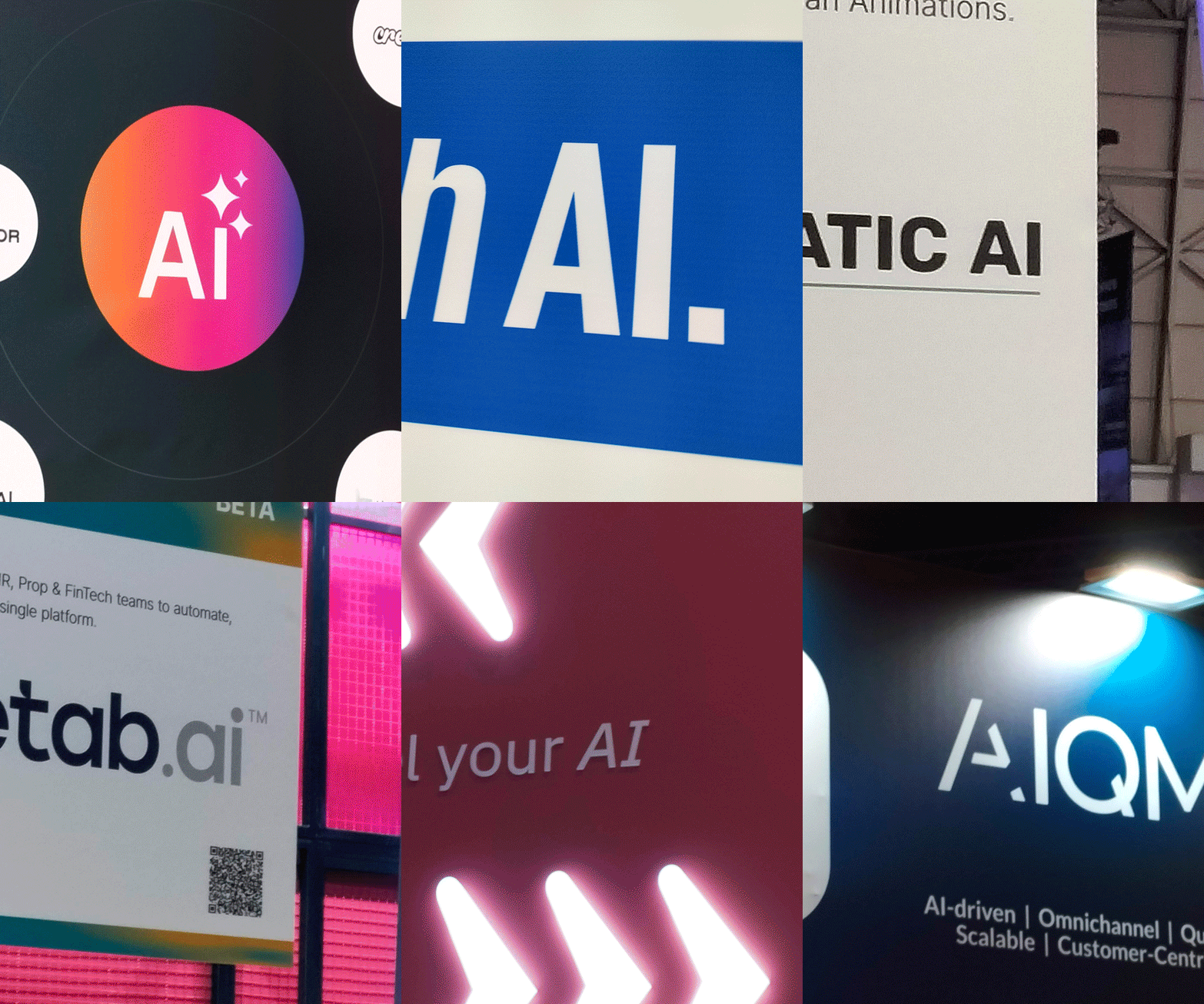
This day was also dedicated to jumping from stand to stand, engaging with startups that were looking for investors. Generally speaking, we observed many brands being built on AI. As a designer, this presented a positive challenge : it’s fantastic that ideas can be quickly presented as first drafts, but it also highlights a clear need. If these projects get funding and develop, we truly hope they recognize that good design is essential. This means companies must hire professional designers to ensure the products have a consistent, which was often lacking in the examples we saw. The stands covered everything from health and personal growth to education, making it genuinely exciting to see so many entrepreneurs.
The day closed on the Centre Stage with a talk that was perhaps refreshing because it didn’t mention the word “AI” a million times. This final session focused on climate, clean energies, and presented a positive view on the future of energy.
Day 3 – Creative summit
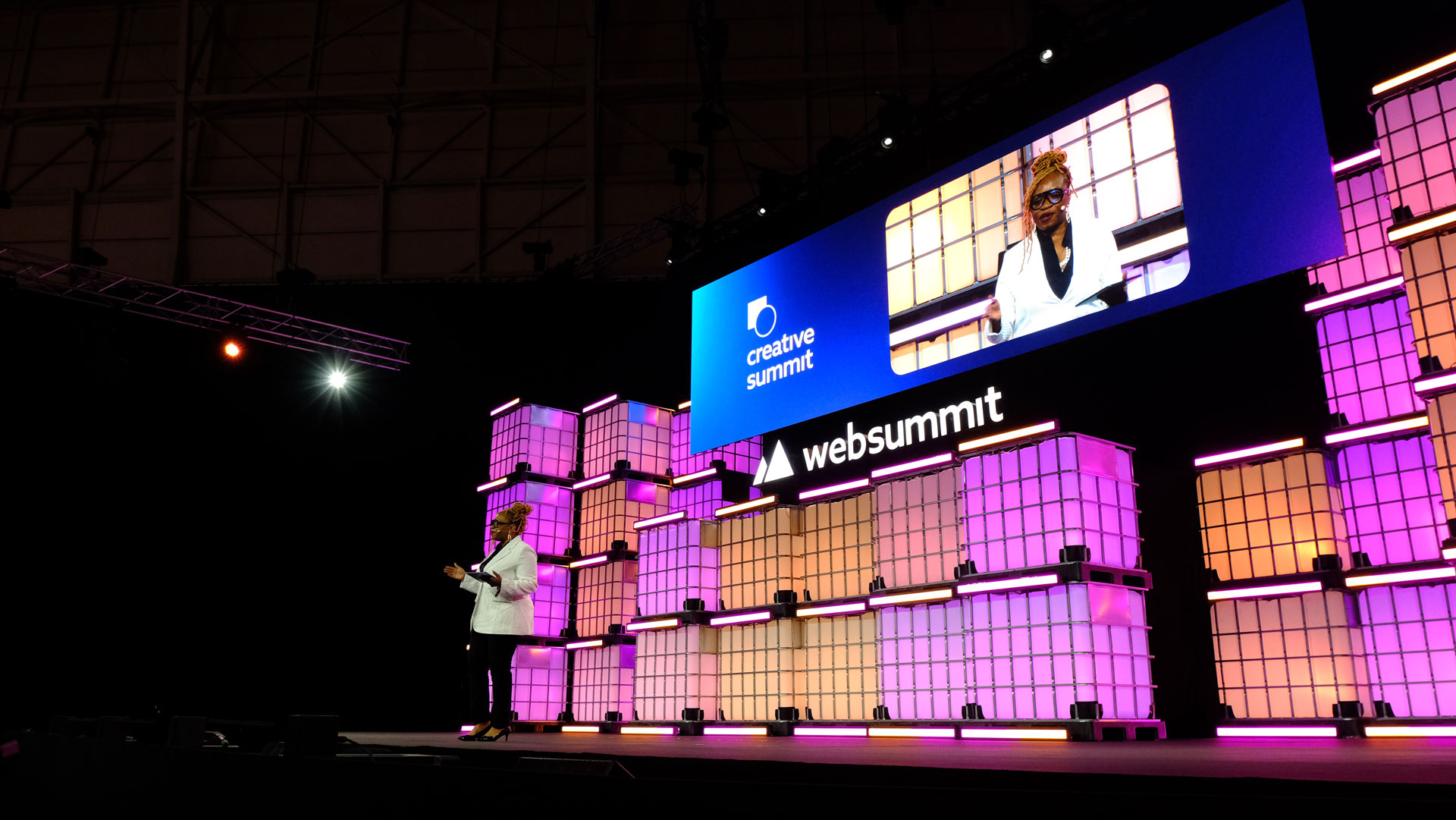
The rain decided to make a show, but we finally felt more at home. After a visit to a client health space (stay tuned for a rebranding project we’re working on to launch in 2026), we spent the afternoon in the Creative Summit, on stage number 3 in Pavilion 1 at the Web Summit. The host was the enthusiastic Anie Akpe, Founder of African Women in Technology (AWIT) and Lumo Hubs, “an AI powered edtech platform partnering with universities across Africa and its diaspora to spark innovation, creative learning, and community transformation.”
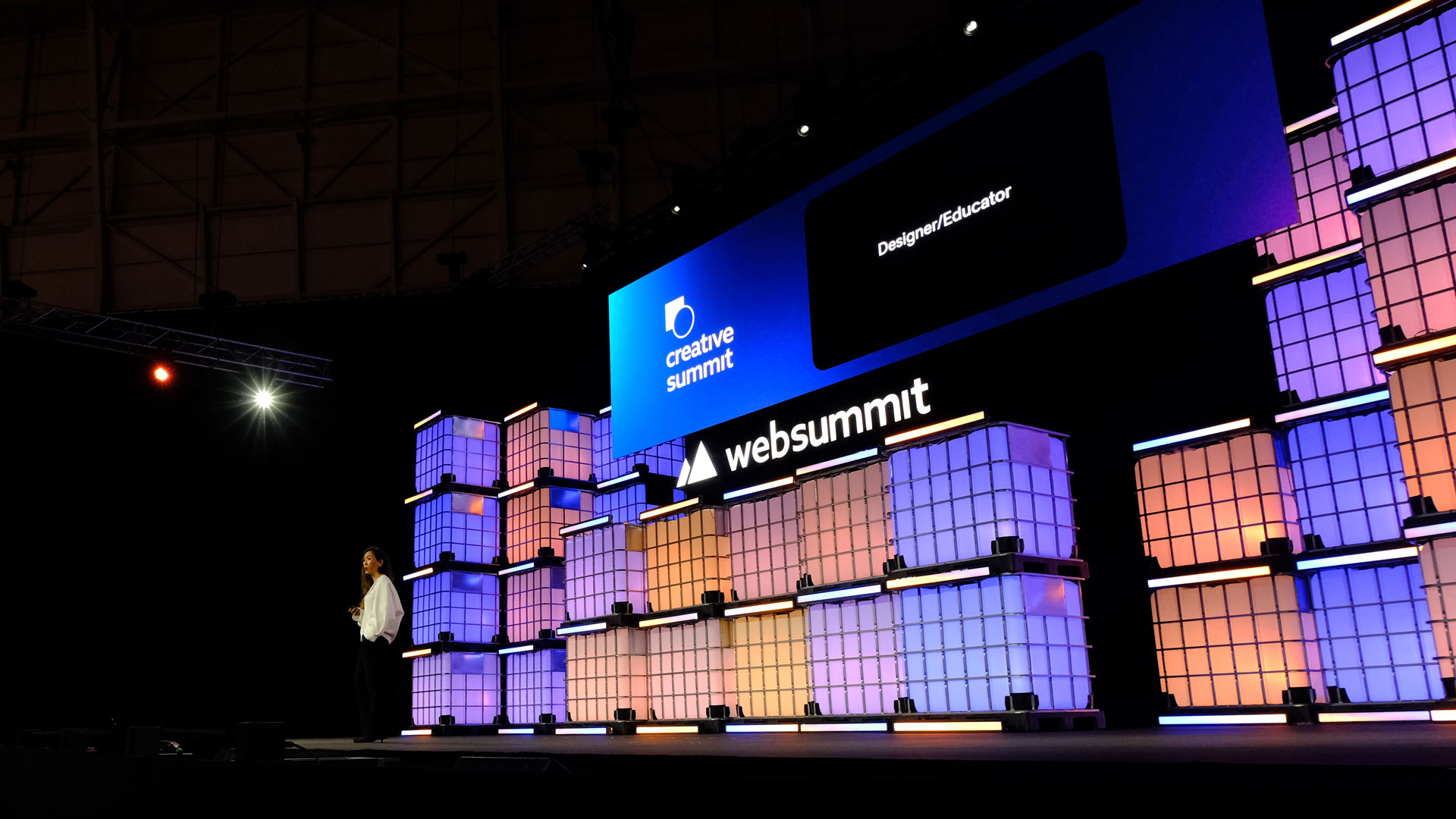
The 1st (and favourite) speaker was Natasha Jen, Partner at Pentagram. She explored “the hidden mechanics of creativity in the age of black-box AI. As generative systems produce images, words, and worlds with no visible process, she asks: what happens to authorship when creation becomes untraceable?” The title was already self-explanatory, this idea of comparing AI to a black box, since you have the result but not the path to it or the thinking behind it, and that is where the talk focused on.
The conclusion was not an anti-AI vision, but advice on how to use it, and a prediction on where the real values are going to be.
“AI generates, Designers solve problems” was one of my favourite sentences.
She reminded us how many times someone has prompted AI something and then tried to add some improvements or details, and the outcome either appears with a different perspective, lacking elements that were already in a good place or something weird happened just because, showing that more detailed words is different from getting better results. And instead of having the fun and freedom of creating a brand or a design from scratch, you’re correcting something that was generated by AI over and over again. Why? Because you’re dealing with unpredictability.
Her concern (and mine too) is that AI diminishes our development freedom, since you can’t learn. Learning comes from doing and crafting and not from fixing an outcome of a machine.
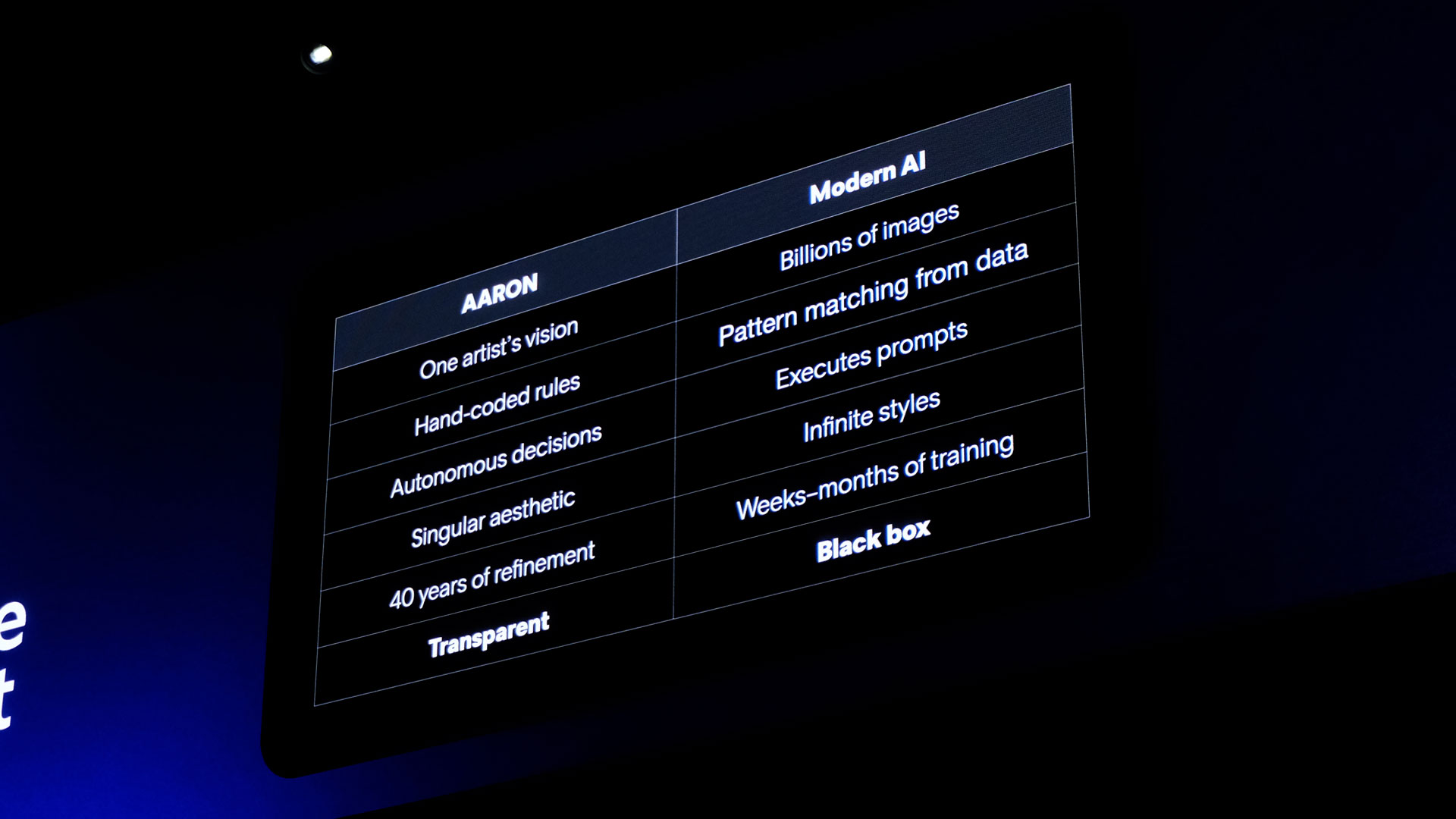
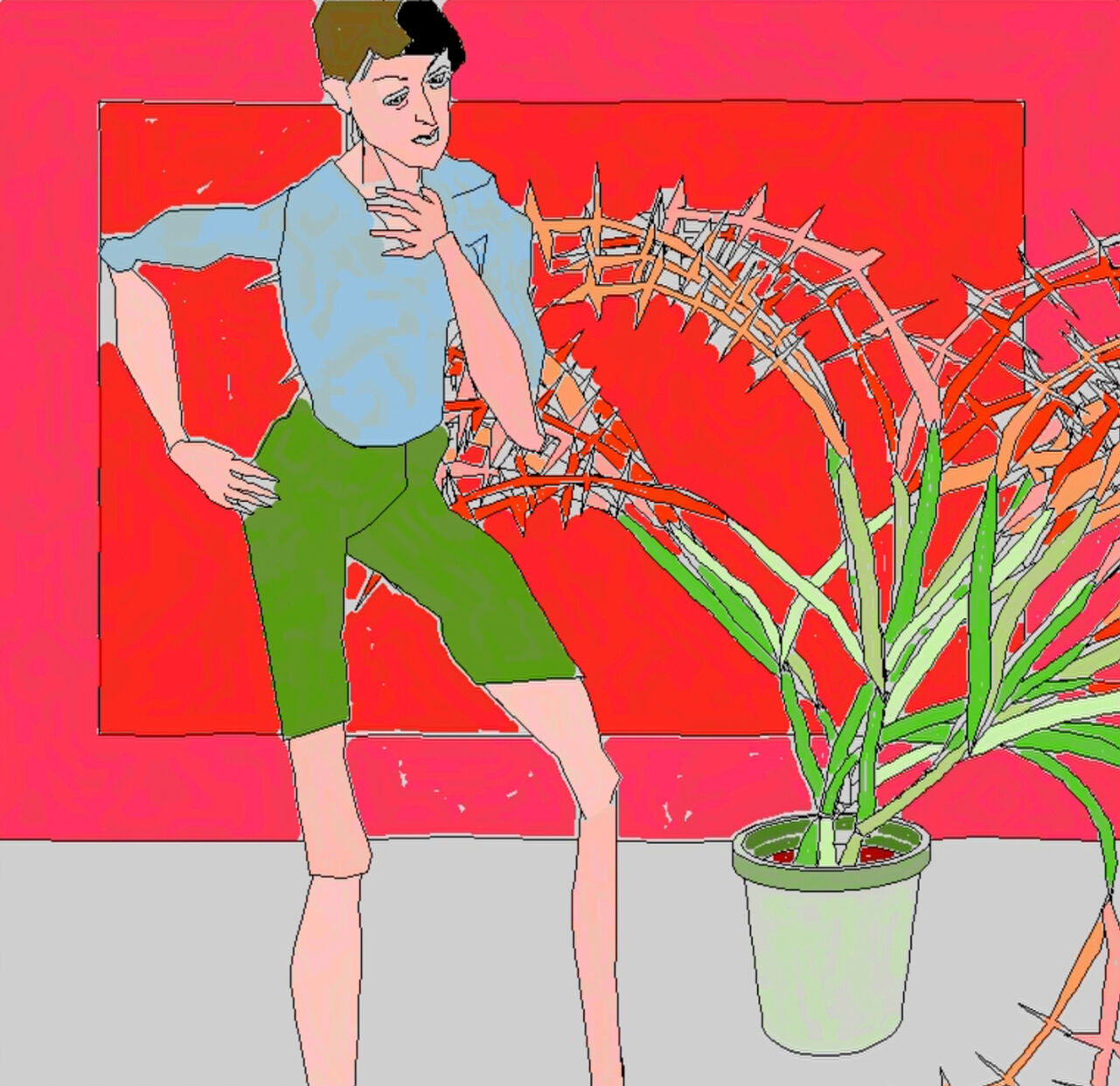
AARON – the earliest artificial intelligence (AI) program for artmaking.
In this line of thought, Natasha doesn’t close her eyes to AI. Instead, she uses a historical case to say there’s another way to think about AI and creativity. Her vision was clear by showing a table on the screen, by comparing Harold Cohen’s AARON, the earliest artificial intelligence (AI) program for artmaking, and modern AI. With the first, you could actually learn and understand its result.
Lastly, Natacha reinforces that “prompts do not equate design”. You only get a consistent outcome when it’s made by people who solve problems; that is where the real gem is going to be after the market becomes saturated by AI-generated content — which results are more or less interchangeable because they all come from the same sources blended together. Thought and strategy are what will bring the most value.
The second talk of the afternoon was Studio Dumbar rocking with motion and sound, their signature style. If you don’t know their work, please check them out.
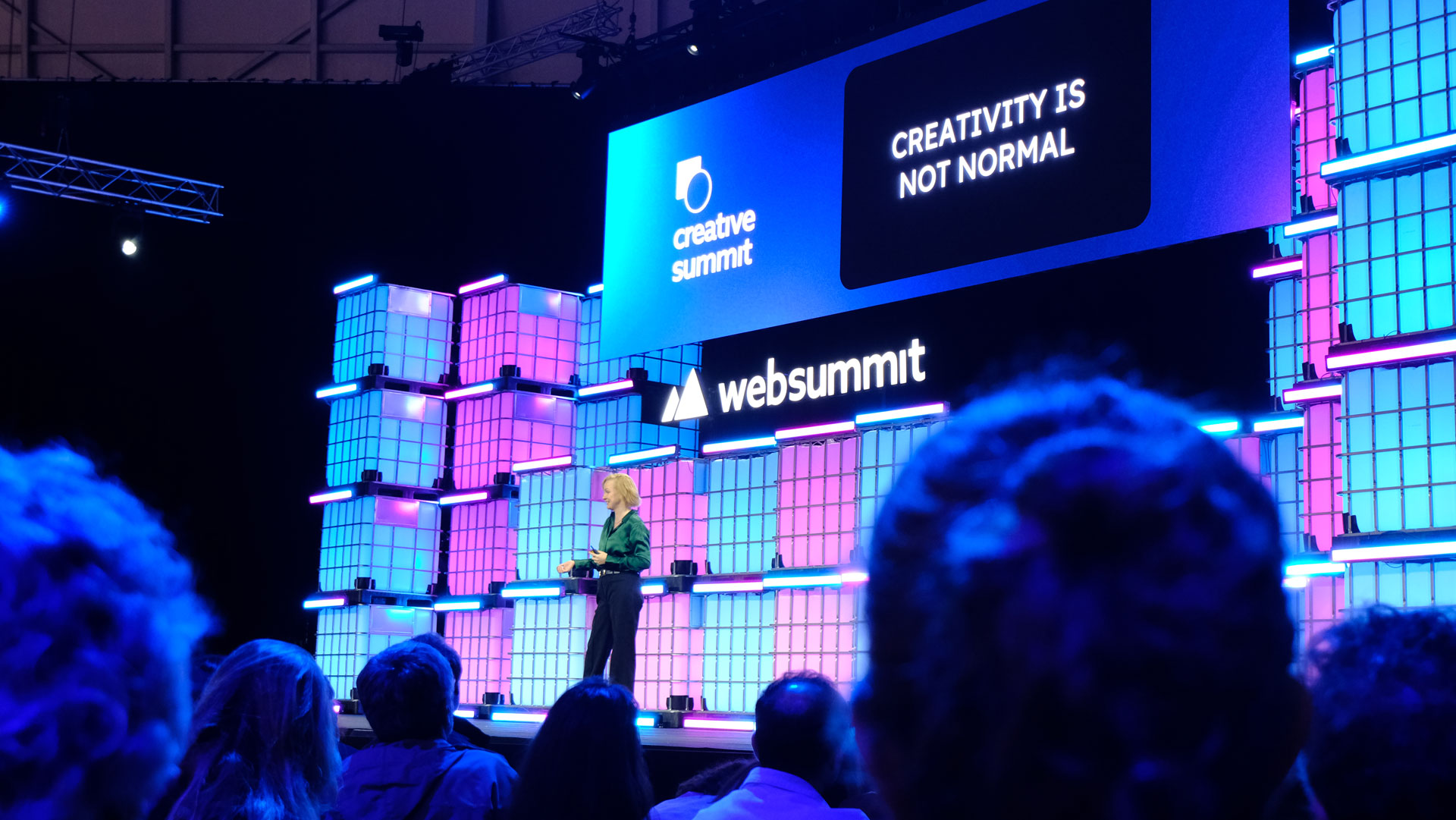
The final talk on the stage was made by Kim Lawrie, who came to break the taboos surrounding neurodiversity. Autistic herself, in her talk she appealed for a society that does not marginalize people whose way of thinking is different and does not follow the rules imposed by the majority. Collaboration with neurodivergent people will only bring benefits to the world and to companies, especially because it is now a trend for large tech corporations to seek out these individuals for the job market. Kim argues that a person with dyslexia uses AI to correct grammar, a person with autism uses it to follow social norms when writing an email, and the majority use it for creativity. She reinforced that the “deficiency” of people with neurodivergence lies in communication rules and not in creative thinking. Kim starts and closes the talk with the sentence, “Creativity is not normal!”, aiming for a world where people with neurodivergence can unmask and collaborate together with others.
Pitch Semi-final
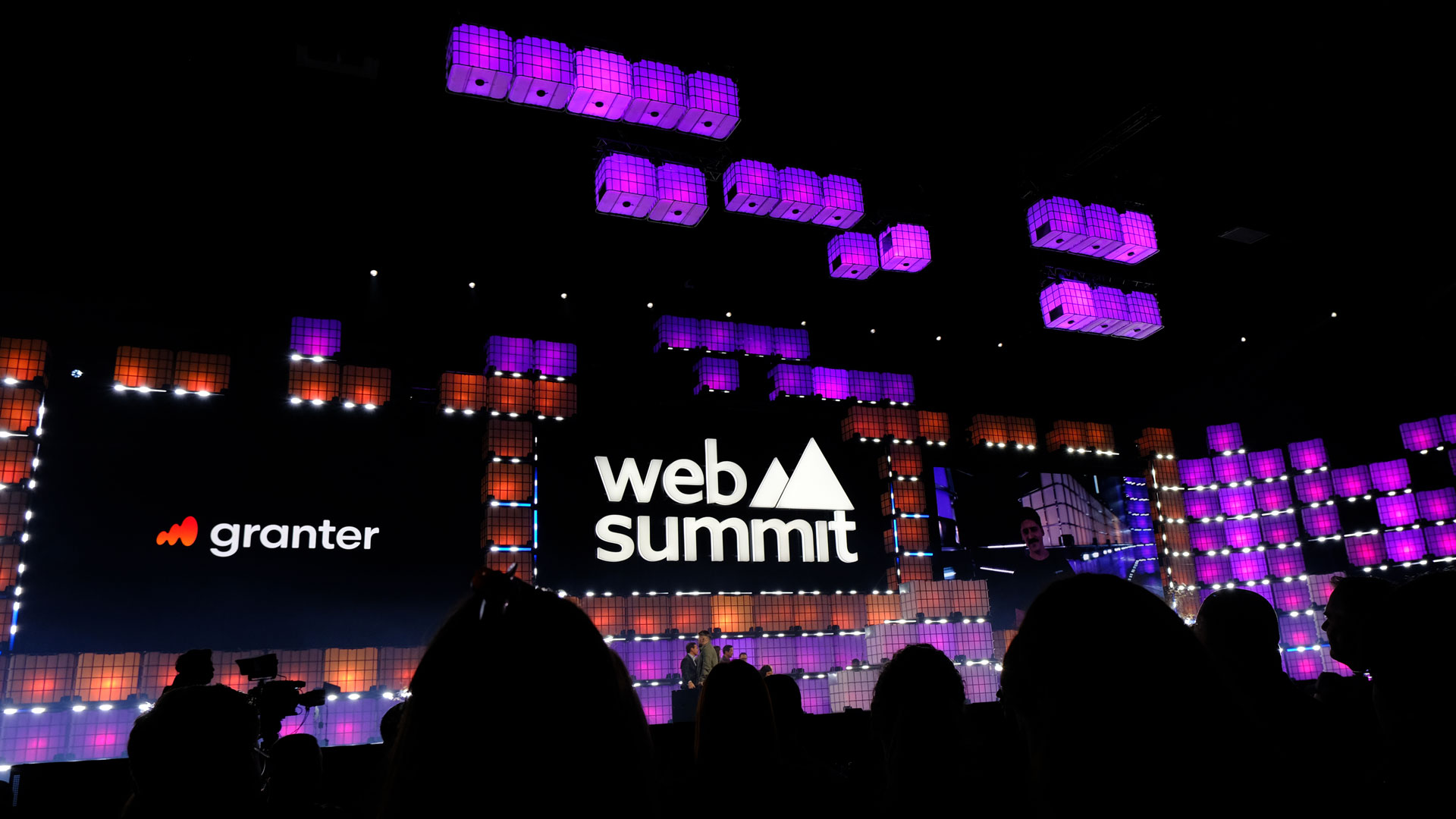
The day concluded with the Pitch semi-final at the Centre Stage, a format resembling a live TV show where entrepreneurs had three minutes to present their ideas. Among the various pitches, the Portuguese team from Granter stood out, proving to be the most charismatic in their presentation, with clear objectives and an original solution to a problem often lost in bureaucracy. Granter aims to put an end to the money, time, and frustration lost in applying for European funding. Although I was not present on the event’s final day, I later saw on social media, upon my return north, that the Portuguese team was victorious.
Robots are here
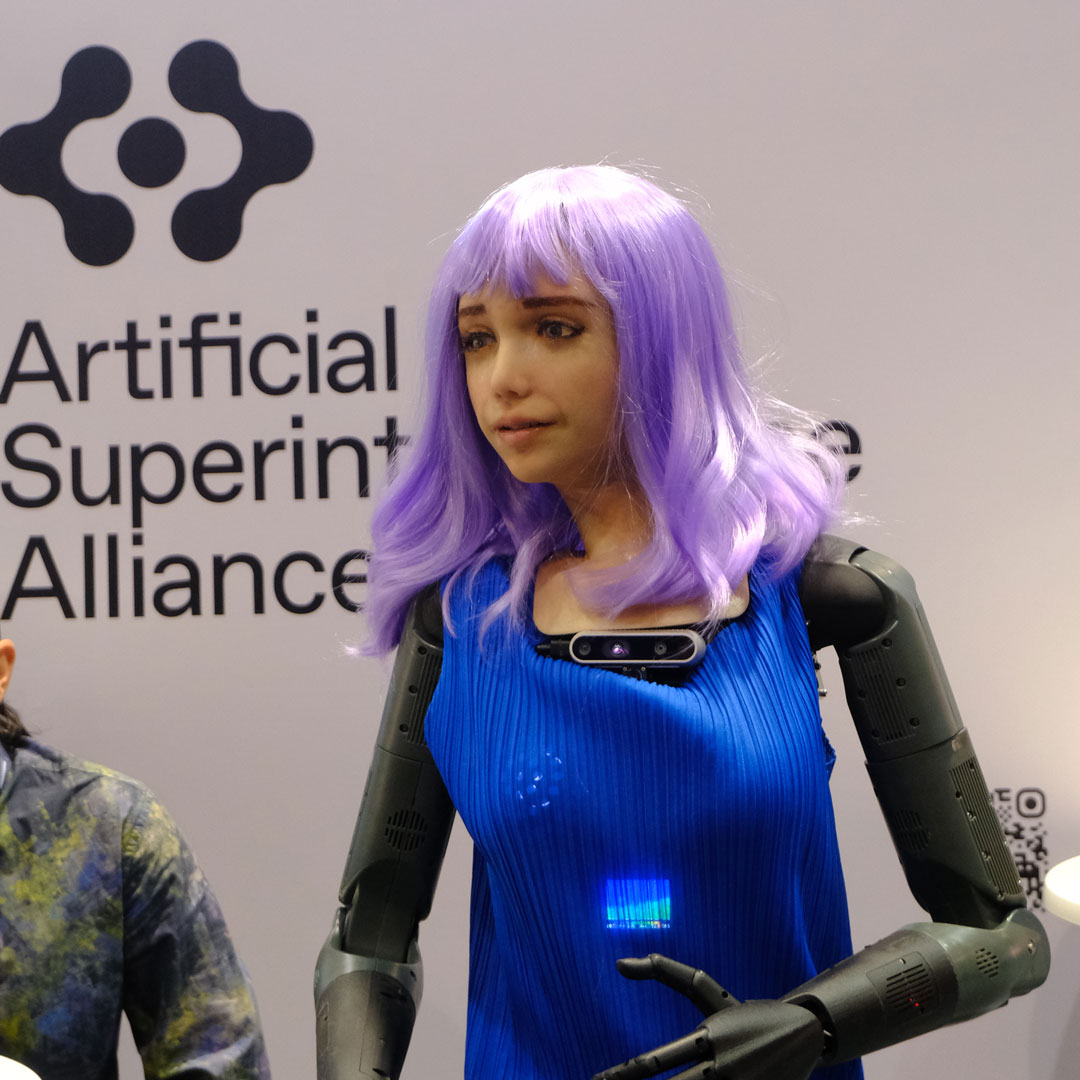
Between pavilions and talks throughout the various days of the event, AI was not only present in the digital realm; we were also able to interact with the robot Desi (Desdemona) from the Artificial Superintelligence Alliance, LOLA the robot from Técnico Lisboa, attend the recording of the Babbage podcast hosted by Mr. Alok Jha (editor at The Economist) with Robert Playter, the CEO of Boston Dynamics, or the Q&A session with Eline van der Velden, creator of the first AI actress.